5 articles Articles posted in vietnamese

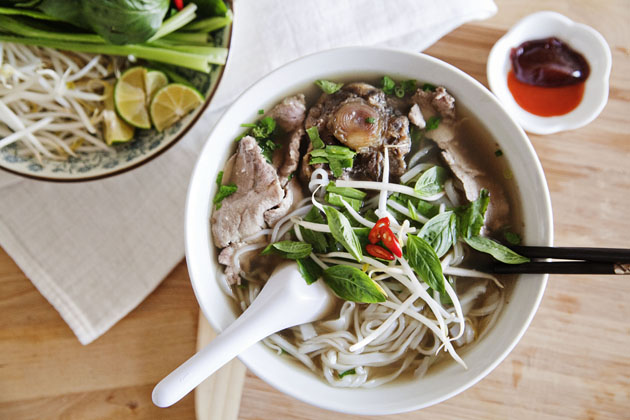
Dad’s Pho Bo (Vietnamese Beef Noodle Soup)

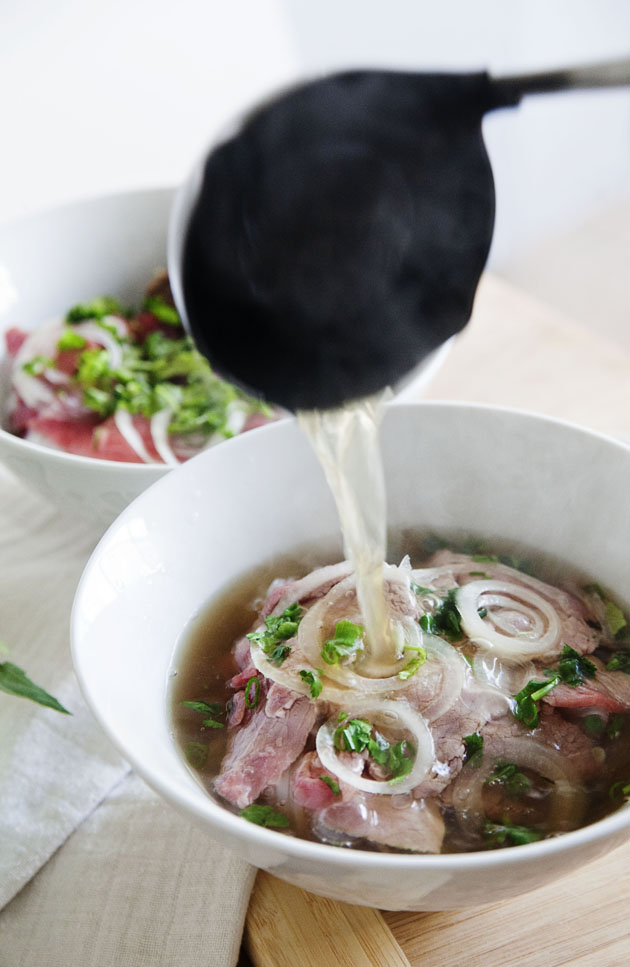
I’m not sure when exactly it became cool to eat pho — that iconic Vietnamese dish of thin rice noodles in beef broth perfumed with spices. Nowadays, you’d be hard-pressed to walk down the street without running into a pho restaurant with either a double digit or a bad pun in its name. The pho craze has gotten so big that it’s resulted in pho food truckspho sandwichesinstant pho noodles, and specialty pho places that serve it with things like oxtail, filet mignon, ox penis, or — what might even be strangest of all — broccoli and quinoa. :) You can find it at Vegas buffets, at summer camps, school cafeterias, even in rap songs!

Growing up in suburban Phoenix, Arizona, pho was as much a part of my childhood as Kraft macaroni and cheese. But sadly it was often the latter that I requested when friends from school had dinner with us. As an awkward teenager just trying to fit in, I specifically asked my mom one time to make Kraft macaroni and cheese when a friend came over, just to make sure nothing strange would be on the menu that night, like tripe or pigs’ feet. After that time, my mom would automatically get the blue box out whenever a friend stayed for dinner.

When it was just us, though, it wasn’t uncommon for my dad to cook up a pot of pho for a weeknight family dinner, a dinner party with friends, or even for our entire Asian church congregation. In our home, cooking pho was both an elaborate ritual and yet second-nature to us all. It was a two-day affair, and we each knew our roles by heart. In the evening, Dad charred the ginger and onions over an open flame on the stove, filling our home with the sweet, smoky aroma. As the soup cooked overnight, Mom got up from bed every few hours to tend lovingly to the broth, making sure it always stayed at a gentle simmer. The next day, my sister and I washed and picked through all the herbs to make sure every leaf was green and every bean sprout white. And it was my special job to roll the lime under the heel of my foot to make sure it was extra juicy before we washed and cut it into wedges. Then the final, most important job was always Dad’s — tasting and seasoning the broth. He somehow always managed to achieve a balance of flavors that’s been beyond our imitation. It must come from decades of pho-making experience.

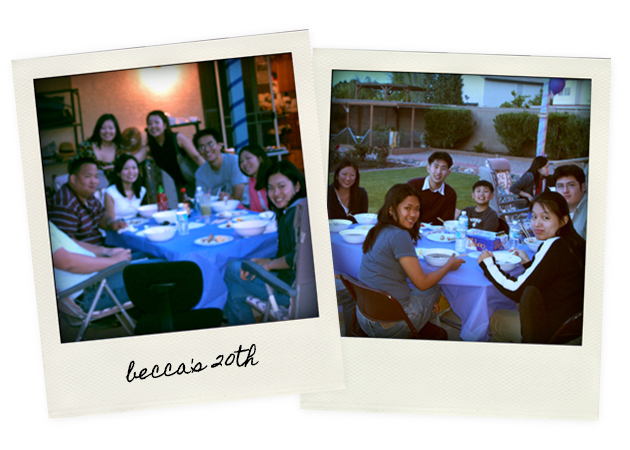
When I went to college, I finally met other people who enjoyed trying new foods and happened to love pho just as much as I did. Not only was it okay to like pho, it was maybe even cool. And having a dad who knew how to make it — now that was something to to be proud of. And so for my 20th birthday, I invited all my friends over and asked my dad to make his famous pho for my birthday celebration.

bday2

I’ve been lucky enough to have lived close to my parents or, later, in cities where good pho could still be sought out. But that all changed a year and a half ago, when I moved to a tiny island in the middle of the Caribbean. While there’s no shortage of things like sugar cane or other tropical fruits here (some of which also grow in Vietnam), I had to resort to bringing my own rice noodles. And I definitely had to start making my own pho.

My sister, on the other hand, has not come by pho so easily in the places she’s lived. Whether it was in the desertlands of Tucson, Arizona, or sub-Siberian Beijing where she lives now, she had long ago prepared for pho emergencies by taking down Dad’s notes. And so it is her recipe and notes that are shared below. And it was this recipe that I followed when I finally simmered my first pot of pho broth earlier this year.

What I’ve found is that my love affair with pho is only deepening as I learn to appreciate the complexity and subtleties of fine pho-making. It’s not until you sit down and learn how to make pho from scratch that you finally understand the whole story of pho. How the smoky sweetness comes from charred onion, the rich mouthfeel of the broth from bones full of marrow and collagen, the clear golden broth color from hours at a bare simmer, and the soft-yet-chewy noodles from flash-boiled, fresh rice noodles.

And when you combine all that with the childhood memories of a mother who’d remember to leave out the scallions and cilantro for a picky eater like me, or a father whose artistic temperament translated into perfectly balanced broth every time, or a family of four who often couldn’t wait for the broth to finish simmering the next day that we’d just drink a bowl of the soup with some meatballs as a midnight snack — well, it’s not hard to understand why I often tell people that if I could have one last meal before I die, I would choose to eat Dad’s pho.

Click through for notes and recipe.

Continue reading →

Vietnamese Sugarcane Shrimp (Chao Tom)

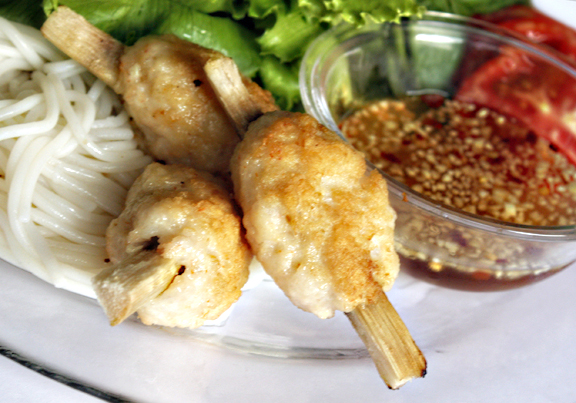
Whenever we go to Vietnamese restaurants, this is one of my Dad’s favorite dishes to order. He doesn’t make it too often at home, and I think part of it has to do with the lack of fresh sugarcane in the grocery stores. Granted, you could probably make it without the sugarcane or even substitute it with something else, but I think munching on the sweet sugarcane at the end is my favorite part of the meal (and his too, I like to think)!

Well, after chopping up my own stalk of sugarcane, I did in fact have fresh sugarcane for this recipe. If it’s not available in your area, you can always used canned sugarcane too.

Vietnamese Sugarcane Shrimp (Chao Tom)
Serves 2 as a meal or 4 for appetizer (accompanied with rice paper and all the fixings)

Instead of chopping the shrimp by hand, you can also use a food processor to make the whole process faster. Even if you use a food processor though, take it out at the end and whack it in a bowl a few times to help make the mixture more springy.

1 lb. shrimp
3 slices bacon, fat only
2 cloves garlic, minced
1 beaten egg white
2 Tbsp. corn starch
1/4 tsp. baking soda
2 tsp. fish sauce
1 Tbsp. oil
1/4 tsp. salt
1 tsp. sugar
dash of white pepper

1. Remove the fat from the bacon. Set aside the meat for another use. Mince and save the fat for the shrimp mixture.

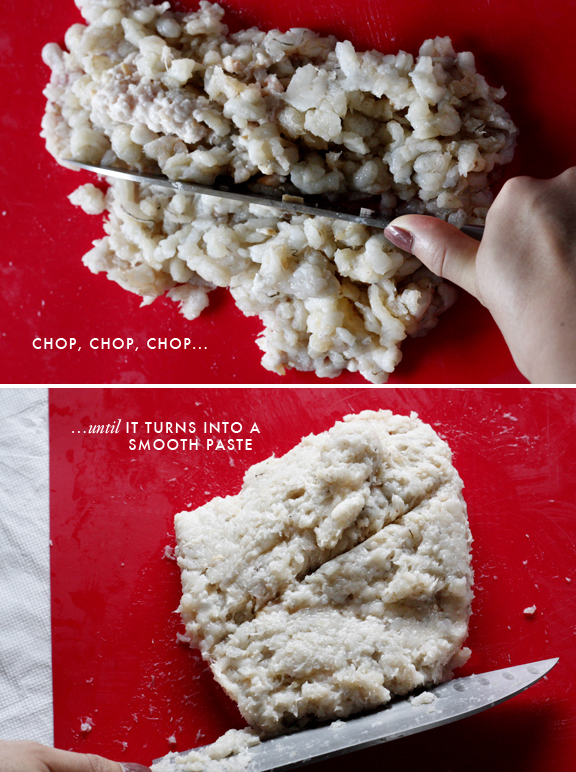
2. Chop up the shrimp and keep chopping until the mixture turns into a smooth paste. This is usually done with a butcher knife and at the point where your chopping is no longer doing any good, use the flat side of the knife to mash the shrimp a few times.

3. Add in the garlic, corn starch, fish sauce, oil, salt, sugar, pepper, and bacon fat. Beat the egg white until frothy and add that in as well. Mix until everything is well incorporated. Pick up the whole mixture in your hand and throw it back into the bowl with a forceful motion several times. This helps add springiness to the mixture.

4. Pound the sugarcane sticks with the flat end of your knife a few times to help the sticks release their juices.

5. Separate your shrimp paste mixture into 12 sections. Grab one section and form an oblong ball with it. Place the sugarcane stick in the center. Press it into the ball and enclose the sugarcane with the mixture. Reform it into a smooth football shape.

6. Place the shrimp sticks into a steamer and steam for 8-10 minutes, until the shrimp turns opaque.

7. Meanwhile, heat up a small amount of oil in a pan. When shrimp is done being steamed, you can dry them off and fry them lightly in the oil to brown the outside.

8. Serve with lettuce, Vietnamese herbs, rice paper, rice noodles, and nuoc cham dipping sauce. For wraps, you can cut the shrimp balls into quarters so they lie nicely in the rice paper.


pho ga (vietnamese chicken noodle soup)

When you’re feeling under the weather, nothing soothes you more than a hot bowl of chicken noodle soup. When it’s cold and rainy outside, hot soup is especially satisfying!  I was actually a bit sick this past week, but because we don’t live close to any Vietnamese restaurants anymore and I didn’t feel like cooking, we just went to Souplantation (also called Sweet Tomatoes in some places). They have, hands down, the best “American” chicken noodle soup ever. The broth is clear and rich, and you just feel healthier eating it! It’s funny because every time we go, all the Asians get bowls of just soup, while all the Caucasians get bowlfuls of just chicken and noodles. Mom always taught me the nutrients are all in the soup!

The Vietnamese version of chicken noodle soup, pho ga, is something that my family made quite often because of its humble ingredients that were always readily available. Pho ga is often overshadowed by it’s richer, more flavorful counterpart, pho bo (or just referred to as “pho“), beef noodle soup. On cold or rainy days though, nothing hits the spot more than a piping bowl of pho ga. Its flavors are a bit more subtle than pho bo, but I think that it has its own complexities and subtleties that don’t hit you over the head quite as much as eating a bowl of pho bo.

Pho ga is pretty simple to make, especially if you have the poached chicken technique down pat. I simply use the stock that was left over from making poached chicken and throw the bones back in after removing all the meat, along with some spices. Sometimes I add in another pound of chicken bones if I happen to have any (or you can always purchase chicken necks from Asian grocery stores too).

Pho Ga
serves 4-6
adapted from various sources

Try to purchase fresh banh pho noodles found in the refrigerated section of Asian supermarkets. If those are not available, the dried ones will do as well. We sometimes also use fresh noodle sheets, which can be found in sheets or pre-cut into 1/2″ strips (the same sheets and strips used for banh uotand beef chow fun). If not cut, simply use a knife to cut to the desired width.

Soup:
1 whole chicken (about 4 lbs)
1-2 lbs chicken bones (not necessary, but adds richness to the broth)
1 whole onion, unpeeled and cut in half
chunk of ginger, about 3″, unpeeled
2 Tbsp whole coriander seeds
4 whole cloves
2 whole star anise
1 1/2 Tbsp sugar (or rock sugar)
3 Tbsp fish sauce
small bunch of cilantro stems, tied
salt, to taste

1 pack banh pho (flat thin rick stick noodles)

Herb plate:
bean sprouts
cilantro
onions, thinly sliced
lime wedges
Vietnamese herbs such as Thai basil and culantro (sawtooth herb)

1. Toast the onion and ginger in the oven, with the temperature set to broil. Toast until the onion and ginger have a nice charred skin. This can take anywhere between 10-20 minutes. You can also toast them directly on your oven range, either with an electric or gas stove. Just be sure to watch them carefully, turn often, and have the exhaust fan on.

2. While the ginger and onion are toasting, you can also take the coriander seeds and lightly toast them in a pan until they are fragrant.

3. After the ginger and onion are cooled, rinse them under water and rub off all the skin. Use a peeler to peel off all the skin from the ginger. Cut the ginger into thick slices.

4. Before doing anything with the chicken or chicken bones, fill a pot with water to parboil the chicken.  This helps get rid of all the impurities and ensures a clear broth.  Heat water until it boils.  Place chicken and chicken bones (if you are using any) into the pot and boil for about 5 minutes. Discard the water and rinse the chicken and chicken parts. Then poach the chicken according to the directions here, but subtract 5 minutes from the timing. Also place in the extra chicken bones. Add the ginger, onion, cilantro stems, coriander seeds, star anise, and cloves to the water as well. This will help flavor the broth and chicken while it cooks. Make sure there is enough water to entirely cover the chicken.

5. After you have removed the chicken and have cooled it in an ice bath, detach all the meat from the bones. Using a large butcher knife, break all the large bones to expose the marrow. Throw all the bones back into the pot.

6. Gently simmer for another 1-2 hours. Be sure not to let it boil too hard, or else the soup will become cloudy.

7. After 1-2 hours, strain the broth to remove all the bone shards. Add in the sugar and fish sauce. Add salt to taste.

8. Prepare noodles according to direction on package. If using fresh noodles, they shouldn’t need to be cooked for more than 1-2 minutes. You will want to err on the side of the noodles being more firm, because they will continue to cook as they sit in the broth. Our family also likes to use flat noodle sheets, as these are sometimes available fresh (and still warm!). They are oftentimes wider and have a smoother texture to them.

9. Prepare the bowls by placing noodles and shredded chicken pieces into a bowl. Ladle in the hot broth. Top with onions and cilantro.

10. Serve with herb plate and Sriracha and Hoisin sauce, if desired. I try to stay away from these sauces, as they tend to overpower the delicate flavor of the broth.

vietnamese beef stew (bo kho)

Fall is well under way here on the Hill. That means lovely cool days, gorgeous colors, scarves, boots, hot apple cider… Indeed, after growing up in Canada, then spending high school and college in the desertlands of Arizona, one of the major things I celebrate about being in the Northeast is having distinct seasons. I love all of them! There is something about seasonal change that my body and soul cannot live without — the cyclical nature of time and growth, the end of one thing and the beginning of another.

Among the many things that fall marks is harvest time and the change in the foods available to us and what we eat. Hot stews make some of the greatest meals now, and this one is a favorite in our household. You might say fall came early over here, as both my husband and his dad love slow-cooked meats and stews, so when my father-in-law came for a visit in August, this was an obvious dish to put on the menu.

Bo kho is actually my husband’s favorite Vietnamese dish. It’s his regular order at any Vietnamese restaurant that serves something other than pho. And what he loves even more than slow-cooked meats is soft, gelatinous beef tendon. So when we make bo kho at home, we make sure to include plenty of that.

Bo kho is another one of those French-influenced Vietnamese dishes. It’s essentially a French ragout with Asian spices. In Vietnam, it’s actually eaten for breakfast and often with a baguette for sopping up the sauce. At Vietnamese restaurants in North America, you will often have the option of eating bo kho with baguette, rice noodles, or egg noodles, all of which make for a hearty, comforting meal. It’s served with Thai basil, a squeeze of lime, and a dipping sauce of salt, pepper, and lime.

Bo Kho
Makes 6 servings

This can be made in either a slow cooker or a Dutch oven. Beef tendon is very tough and requires cooking separately for several hours to become tender. We like our tendon super soft and gelatinous rather than chewy, so we simmer it for a good number of hours, until it can be easily sliced through, before adding it to the stew to simmer even longer and to soak up some flavor.

1.5 lbs beef tendon
1 tsp baking soda
1.5 lbs beef chuck or shank

Marinade:
1 tsp salt
1 tsp sugar
1 Tbsp fish sauce
1 6-oz can tomato paste
2 bay leaves
2 star anise
3 cloves
3 stalks lemongrass, cut into 4-inch pieces and bruised
1 tsp curry powder
1 tsp 5-spice powder

2 Tbsp vegetable or canola oil
2 cloves garlic, crushed
beef broth or water
3 medium carrots, cut into thick slices

Accompaniments:
baguette, rice noodles, or egg noodles
Thai basil
lime wedges
salt, pepper, and lime dipping sauce

1. Boil a pot of water with the beef tendon and 1 tsp of baking soda. Simmer for 3 hours or until tendon becomes tender enough for a knife to cut through it with some ease. You may want to simmer this in a slow cooker overnight, so that the tendon is ready to cook in the stew the next day. When tendon is tender, drain and rinse. Cut the tendon in half lengthwise and then into pieces about 2 inches long.

2. Wash and pat dry the beef chuck or shank. Cut into 1.5-inch cubes. Mix in the marinade ingredients. Let marinate for 30 minutes and up to overnight.

3. Heat the oil on medium-high, and then add the crushed cloves of garlic. When the garlic begins to brown, add the marinated beef chuck/shank, along with all the marinade ingredients, and let it brown. You may want to do this in several batches to avoid overcrowding the pot, so that the meat sears rather than steams. Put all the meat, plus the cooked tendon, back into the pot. Then add enough beef broth or water to cover everything by an inch or so.

4. Let the stew simmer on low for about 3 hours. (You can also transfer the stew to a slow cooker at this point and cook on low overnight.) Add carrots to cook during the last half hour.

5. Serve the stew in shallow dishes with baguette, or serve over rice or egg noodles. Include Thai basil, lime wedges for squeezing over, and salt, pepper, and lime dipping sauce for the meat.