meat loves salt Rotating Header Image

cooking at home, part 4: my favorite appliances

My last post in this series is devoted to some of my favorite kitchen appliances…

The freezer. I get rather embarrassed when a friend comes over and wants to stick, say, a pint-size tub of ice cream in my freezer, and I don’t really have space for it. I’m afraid I look like quite a hoarder if you peek in my freezer! When I’m good about it, I try to keep a rough inventory of what’s in my freezer, to make sure I don’t neglect something that’s stored way back in the corner.

Growing up, my parents always had a separate deep freezer at home, even when we lived in a small apartment. That’s because they always stocked up on sale items, hard-to-find ingredients (like Asian ingredients when you’re living in, say, Saskatchewan), and meals prepared in advance. I’m lucky to have space for a normal-size fridge at all, let alone a deep freezer, so I try to make use of every square inch of the freezer I do have. My sister likes to make fun of the way I organize my freezer like a bookshelf ’cause I like to freeze things flat in quart-size Ziplock bags and stand them up for easier access. :)

A peek inside my freezer, organized "like a bookshelf" according to my sister.

I freeze everything from pre-made meals, to homemade stock, to chicken carcasses (for making more stock), to shredded cheese (bought in bulk during sales). I also like to use the ice cube tray for freezing ingredients you might need in smaller amounts in certain recipes (like tomato paste or stock for sauces). After the cubes are frozen, I take them out and store them in Ziplock bags. My sister’s in-laws have a lemon tree, and they like to freeze lemon juice in the ice cube trays for months when lemons are out of season.

The rice cooker. When I went abroad to France for nine months during college, I actually made room in my two allowed pieces of luggage for, that’s right, my rice cooker. I blame it on my parents. When I was growing up, they often brought a rice cooker on family vacations. We cooked meals in motels, with the rice cooker sitting next to the sink and plugged into the outlet meant for blow dryers. How Asian of us, right? :)

My first rice cooker was a cheap, simple model (and I actually left it behind in France so I could make room for all the souvenirs I was bringing back), and it was the same one I used when I lived in the dorm my freshman year of college (particularly useful there because hot plates were not allowed in American dorms… unlike in French dorms). I cooked so much more than rice in that thing. I made instant noodles. I steamed and boiled veggies. I even tried to stir-fry in there (ok, that didn’t work too great). I also made congee in it by leaving the lid off (it was a one-function rice cooker that was not meant to make congee like the fancy ones these days). You can basically make anything in there that you’d normally boil water for. Many of my dorm meals consisted of rice plus veggies and marinated meat, which all cooked in the steam created in the rice cooker. I didn’t even use the steamer insert — I just threw it all in there and let it cook together.

Nowadays, I don’t make use of my rice cooker nearly enough. The fancy Zojirushi model I have now takes a while to cook rice, so I end up making a big batch of rice all at once on the weekends. The rest of the time, my rice cooker, sadly, sits in my cupboard. What I do use every day and reserve valuable kitchen counter real estate for is…

The toaster oven. You can make anything in the toaster oven you would make in a real oven, just in smaller portions. But this makes it perfect for daily use. I’ve had my convection Euro-Pro toaster oven since grad school, and even though it’s almost died on me several times, I’m still holding onto it because I haven’t been able to find a good-size model like this available anymore — big enough to hold more than two slices of bread, but not giant and boxy the way they make them to bake pizzas these days. I make room in my teeny tiny kitchen for this one appliance because I use it every day. I bake eggs or make toast in it for breakfast and roast veggies and meats in it for dinner. I’ve even roasted a whole chicken in it many a time. Given that my actual oven is miniature in size, used to store pots, and is really temperamental temperature-wise, my toaster oven is indispensable in my day-to-day cooking. Chef Eric Ripert even has a video series called Get Toasted that’s dedicated to this little appliance.

What appliances do you use every day at home? If you were going abroad for a year, what kitchen tools would you bring with you or invest in during your temporary stay?

This post concludes my Cooking at Home series this week, but I’m always on the lookout for ways to make my weekly meal preparation go more smoothly, so feel free to send tips my way any time. :)

cooking at home, part 3: meal preparation

After all that meal planning and grocery shopping, the real fun begins…

Saving time with prep work. I have a certain system I like to follow each week. Upon returning home from the grocery store, I make sure the dishwasher and sink are cleared. I go through the fridge and toss out anything that’s gone bad. I also take this opportunity to do a wipe-down of the fridge if it needs it. I then wash and chop most of my produce, storing things in containers or in Ziplock bags lined with a paper towel to soak up some of the moisture. If necessary, after washing and spinning, I’ll lay greens out on kitchen towels to dry before storing, as the moisture makes them go bad more quickly. I often keep containers of chopped scallions, fried shallots, chopped onion, and other often-used ingredients ready in order to speed up cooking later on. For example, it’s easy to cook up a quick omelette in the morning by grabbing the pre-chopped onion and scallions and tossing in some prewashed spinach leaves.

Viet herbs and squash blossoms, washed and spun, now laid out to dry on kitchen towels; ready for Vietnamese wraps, noodle bowls, and soups later in the week.

Batch cooking. If it weren’t for the cleanup that ensues (and, oh, all the other non-food-related work I have to do), I could easily and happily spend every moment of the day cooking. What actually happens, though, is that I have one or two cooking sessions each week — a more involved one on the weekend and a less involved one about mid-week. On an average weeknight, I’m either repurposing leftovers, reheating a pre-made meal, or using ingredients prepped ahead of time to cook up a quick dish or two. One of the greatest advantages of batch cooking, I find, is that it not only makes cooking more efficient — it also makes cleanup more efficient.

While I’m doing prep work on the weekend, I cook up large batches of certain things for the week, like oatmeal, rice, and steamed veggies. I know my sister likes to boil a bunch of eggs to throw into salads or have for breakfast. I also like to make a jar of vinaigrette for the week’s salads.

In addition to cooking several meals at once, I also increase the portions. Whenever I make a dish, I usually make enough of it to last at least two meals. I find that four meals is my limit for eating the same thing (and it has to be something I enjoy in the first place), and it’s helpful if those aren’t all in a row too. An easy rhythm to get into is to always double your dinner portions, so that you can bring the leftovers for lunch the next day. This doesn’t work so well with things like fish (and other smelly items), in which case it’s helpful to have some alternative ready-made meals to bring instead. For things that freeze well, I’ll quadruple the portions, saving enough for two meals now and freezing two meals for the future.

One of my husband's packed lunches this week, made up of leftovers -- brown rice, steamed broccoli, poached chicken, and ginger scallion dipping sauce.

Repurposing ingredients and leftovers. I try to plan for dishes with overlapping ingredients in the same week. For example, if I’m getting cilantro and lime for some Vietnamese dishes this week, I’ll also work in some Mexican dishes, where those ingredients are prominent as well. I also mentioned earlier this week how I like to plan my menu around base meals and leave room for variation. We often use our poached chicken later in the week for noodle soups, salads, or chicken enchiladas. Meats are always easy to repurpose into things like wraps, sandwiches, and to add to salads and soups. Certain veggies can work this way too, like spinach or mushrooms, which often act as meat replacements in vegetarian dishes.

Do you cook every day? Do you have a process to make weeknight dinners more effficient? How do you handle breakfast and lunch?

cooking at home, part 2: grocery shopping

Grocery shopping is always a challenge when you live in a big city. The grocery stores are smaller, prices are higher, parking is more of a hassle (and if you’re not driving, well, then you have to deal with hauling groceries home), and kitchens are teeny tiny. My own kitchen is outfitted with an apartment-size oven and dishwasher, which is to say — miniscule! It’s a challenge to cook from home even if you wanted to. Over the past few years, I’ve been slowly learning how to make do here, and it’s always an evolving process.

Spring haul from Eastern Market.

Stocking up. If you don’t cook regularly or don’t have a household to feed, cooking can feel like a special event, and grocery shopping can often revolve around only what you foresee eating in the immediate future. But instead of planning a grocery list around a couple dishes you feel like this week (don’t get me wrong, I do plenty of this, but it’s hard to sustain on a daily/weekly basis), it can be helpful to try planning your regular menu around what’s available — what’s in season, what’s on sale, and what’s near you. You can always store things by freezing, canning, or putting away in a dry, cool place for the colder seasons or simply busier weeks. Cooks are always touting the benefits of having a well-stocked pantry, which makes it easier to cook last-minute meals, which in turn means it’s easier to eat at home and to eat more healthily.

When I was growing up, my mom scoured the weekly grocery store circulars for sales and coupons. For particularly good sales, she often made special trips out to that store just to buy that one sale item in bulk. Advertisers never got the better of her — she often was there for that sale item alone and then got the rest of what she needed elsewhere. These days, I’ll only make a special trip like that when I come across a particularly great deal. And although I’ve always been in awe at master coupon-clipping folks, I find that most coupons are for things I don’t usually buy.

Since distance (and traffic!) can negate the advantage of a good sale here, and space is limited in my apartment anyhow, I’ve instead come to rely on a rotation of grocery stores I frequent for various reasons. I usually limit myself to only one grocery store each week, which means I know I’m not getting the best price on everything, but it’s a tradeoff that I make. I offset this by not going to the same store every week. I alternate between more general grocery stores and more specialized ones, stocking up in advance on items I know won’t be available at the store I visit the following week.

Most weeks I actually go to Costco (more on this later), and that is one place I often do pair with a general grocery store, where I can get things that we don’t need in bulk. Luckily, there’s a Harris Teeter just behind our nearest Costco, so I sometimes hit up both when I have time. But when I don’t, I can make do with just a Costco run and what I have in my pantry and freezer. Some of what we buy in bulk at Costco will last two weeks (or more), so the following week I’ll often go to one of my other stores. Sometimes it’ll be Shopper’s, which I started frequenting because it’s next to Target. Shopper’s is not your fancy grocery store, but I was actually surprised to discover what a wide selection of international and health food items are available there. And their prices tend to be lower than, say, Harris Teeter. Target also is a great place for food-shopping — I find their dry goods are well priced, but for produce I stick to grocery stores. About every month or two, I’ll make the trek out a bit farther to Grand Mart, which is one of the larger Asian grocers that’s closest to me. I stock up on all my Asian ingredients as well as cheap produce. While I’m there I pick up things like lemons and limes, carrots, potatoes — basic pantry items that cost more elsewhere and that last a little while. Every now and then I’ll go to Trader Joe’s, which I love and would frequent much more except that it’s a bit out of the way for me.

Veggies from our CSA share this past summer.

This past summer, my husband’s co-worker convinced her CSA to start delivering to their workplace if they could get together enough interested people. So I finally got to give CSAs a try! It was pretty fun opening up our box each week to see what we’d find — a nice change from my well-worn weekly routine! We’re also lucky to live close to Eastern Market, so many Sunday mornings you can find us walking there for coffee and people watching. In the spring I love to pick up fresh herbs and fruit there. It’s nice to get in some support for our local farmers to help offset all the Costco trips I make. :P Which brings me to my next topic…

Favorite prepared items. I have to confess that I generally love Costco so much I dearly miss it whenever I am in China for long periods of time. I have to be careful when I’m there, though — because things are sold in bulk, your bill can quickly add up after just a few items! The reason why I go to Costco many weeks is hands-down because of all the precut, pre-washed, sometimes even organic produce you can buy in bulk. Not everything is a great deal, but my regular items include broccoli, spinach, berries, organic milk, eggs, whole chicken, and salmon. I also like to get cheese there. It’s a lot, but it lasts a while (and I love cheese). My other favorite place for stocking up on both cheese and ready-made meals is Trader Joe’s. The cheese selection and prices are just unbeatable there. And I particularly love TJ’s dry boxes of Indian Fare curries. I always stock up on these, as well as naan that I divide into one-meal portions and freeze — these make such great packed lunches during busy weeks. Lately, I’ve also been wondering about Amazon for things like whole wheat pasta in bulk too.

So there you have it, my weekly grocery shopping process. What stores do you frequent, and what are some of your favorite items to get there?


cooking at home, part 1: meal planning

When I think back to childhood, I tend to think of my dad effortlessly filling the dinner table every night with an array of home-cooked dishes. Weekends were even more elaborate, some Saturdays devoted entirely to cooking together as a family. I always knew our meals didn’t just appear out of thin air, but I don’t think I fully understood just how much a labor of love it was to provide us with a homemade meal three times a day. Even now, whenever I visit home, on the mornings I get up early to catch a flight, my mom or dad will still get up before me to make a hot breakfast and a packed lunch for the trip.

I’m still learning these lessons of sacrificial love. And as I’m continuing to grow into my roles as a wife and a mother, I’m always looking for ways to not just feed my family, but to put the same amount of care in the meals I make.

In reality, this is less about making every meal a feast and more about striving for balance in time, nutrition, budget, and taste. And still leaving room for spontaneity, creativity, and leisurely meals around the dinner table (or coffee table in our case :)!

This series of posts is devoted to some of the ways I try to make weekly meal preparations go more smoothly in our home. It is also an excuse to ask readers to share your own tips and tricks with me!

Here’s a look today at how I typically approach meal planning…

Meal planning. We eat most of our meals in (and usually bring lunches to work), so planning out the week’s meals in advance definitely helps me see how busy of a week it’ll be, which meals we need, and when I’ll have time to cook. I’ve come to rely on a couple of tools to help with this: I create Google spreadsheets to plan out a schedule and adaptable menu for the week. I keep running grocery lists for various stores on Things (a task-management tool). And I’ve recently been experimenting with Mealboard, a recipe-storage app that allows you to import recipes, generate grocery lists out of the ingredients, and create weekly meal plans. Since I’m going to be relying more on repetition this year, I thought I’d try using this app more often. Even when I’m not using recipes, it helps to have an ingredient list so I don’t forget to pick up anything.

Rotation of dishes. I try to keep several favorite dishes on rotation, which helps streamline the grocery-buying as well as the cooking process. The system is flexible, and there are some slots in there that I leave open for whatever we may be feeling like that week. I find that a two-week rotation works well for us — short enough to get into a rhythm, but not so repetitive it gets monotonous. I also like to use base meals as a starting point, leaving room for variation. For example, whole chicken is something that is always in our rotation — oftentimes I like it poached (which yields broth in addition to chicken), but I’ll vary it up some weeks by roasting instead, or, on a busy week, we’ll just pick up a rotisserie chicken from Costco (I find theirs the tastiest, and it tends to be the cheapest too). I also have a couple easy fallback dishes, like steamed egg, that use ingredients I usually have on hand and are quick to make.

How do you typically approach cooking for your family or yourself on a regular basis? If you have any favorite timesaving tips, resources, and products, please do share them in the comments this week!

Stay tuned tomorrow for a glimpse into my grocery-shopping process…

happy new year

While it’s still January and the start of Chinese New Year / Tet, I thought I’d take the opportunity to pop in to say HI and HAPPY NEW YEAR! I know it’s been a while, so thank you, faithful readers, for sticking with us!

(A Chinese new year housewarming we had a couple years ago.)

The past few months have been a wonderful blur of welcoming this little guy into our lives…

… who actually looks a little more like this now…

It’s been a crazy wonderful journey. We were very blessed to have my mom stay with us  – thanks mom! — to help us in all sorts of ways. She did a fair bit of night duty with me, cooked me all kinds of nutritious, restorative foods, and generally just loved on all of us. I’ve mentioned before how everyone, young and old alike, treats my mom like she is their own mother, because she truly has a tenderness and sacrificial nature that makes people instantly trust her with the deepest things in their hearts. Watching my mom with little E. the past few months has given me a glimpse of just how she must have cared for me when I was first born, and I feel so special to be able to witness that. I am truly blessed to call her mom!

As I’m adapting to my own new role of being a mom, I’ve been trying to streamline my life more, which includes how I prepare our meals. So I thought I’d take the next few posts to share a little bit about what I’ve been doing and ask readers for anything you’ve found helpful in your own meal prep routines. So stay tuned, and in the meantime, HAPPY YEAR OF THE DRAGON!


pho ga (vietnamese chicken noodle soup)

When you’re feeling under the weather, nothing soothes you more than a hot bowl of chicken noodle soup. When it’s cold and rainy outside, hot soup is especially satisfying!  I was actually a bit sick this past week, but because we don’t live close to any Vietnamese restaurants anymore and I didn’t feel like cooking, we just went to Souplantation (also called Sweet Tomatoes in some places). They have, hands down, the best “American” chicken noodle soup ever. The broth is clear and rich, and you just feel healthier eating it! It’s funny because every time we go, all the Asians get bowls of just soup, while all the Caucasians get bowlfuls of just chicken and noodles. Mom always taught me the nutrients are all in the soup!

The Vietnamese version of chicken noodle soup, pho ga, is something that my family made quite often because of its humble ingredients that were always readily available. Pho ga is often overshadowed by it’s richer, more flavorful counterpart, pho bo (or just referred to as “pho“), beef noodle soup. On cold or rainy days though, nothing hits the spot more than a piping bowl of pho ga. Its flavors are a bit more subtle than pho bo, but I think that it has its own complexities and subtleties that don’t hit you over the head quite as much as eating a bowl of pho bo.

Pho ga is pretty simple to make, especially if you have the poached chicken technique down pat. I simply use the stock that was left over from making poached chicken and throw the bones back in after removing all the meat, along with some spices. Sometimes I add in another pound of chicken bones if I happen to have any (or you can always purchase chicken necks from Asian grocery stores too).

Pho Ga
serves 4-6
adapted from various sources

Try to purchase fresh banh pho noodles found in the refrigerated section of Asian supermarkets. If those are not available, the dried ones will do as well. We sometimes also use fresh noodle sheets, which can be found in sheets or pre-cut into 1/2″ strips (the same sheets and strips used for banh uot and beef chow fun). If not cut, simply use a knife to cut to the desired width.

Soup:
1 whole chicken (about 4 lbs)
1-2 lbs chicken bones (not necessary, but adds richness to the broth)
1 whole onion, unpeeled and cut in half
chunk of ginger, about 3″, unpeeled
2 Tbsp whole coriander seeds
4 whole cloves
2 whole star anise
1 1/2 Tbsp sugar (or rock sugar)
3 Tbsp fish sauce
small bunch of cilantro stems, tied
salt, to taste

1 pack banh pho (flat thin rick stick noodles)

Herb plate:
bean sprouts
cilantro
onions, thinly sliced
lime wedges
Vietnamese herbs such as Thai basil and culantro (sawtooth herb)

1. Toast the onion and ginger in the oven, with the temperature set to broil. Toast until the onion and ginger have a nice charred skin. This can take anywhere between 10-20 minutes. You can also toast them directly on your oven range, either with an electric or gas stove. Just be sure to watch them carefully, turn often, and have the exhaust fan on.

2. While the ginger and onion are toasting, you can also take the coriander seeds and lightly toast them in a pan until they are fragrant.

3. After the ginger and onion are cooled, rinse them under water and rub off all the skin. Use a peeler to peel off all the skin from the ginger. Cut the ginger into thick slices.

4. Before doing anything with the chicken or chicken bones, fill a pot with water to parboil the chicken.  This helps get rid of all the impurities and ensures a clear broth.  Heat water until it boils.  Place chicken and chicken bones (if you are using any) into the pot and boil for about 5 minutes. Discard the water and rinse the chicken and chicken parts. Then poach the chicken according to the directions here, but subtract 5 minutes from the timing. Also place in the extra chicken bones. Add the ginger, onion, cilantro stems, coriander seeds, star anise, and cloves to the water as well. This will help flavor the broth and chicken while it cooks. Make sure there is enough water to entirely cover the chicken.
5. After you have removed the chicken and have cooled it in an ice bath, detach all the meat from the bones. Using a large butcher knife, break all the large bones to expose the marrow. Throw all the bones back into the pot.

6. Gently simmer for another 1-2 hours. Be sure not to let it boil too hard, or else the soup will become cloudy.

7. After 1-2 hours, strain the broth to remove all the bone shards. Add in the sugar and fish sauce. Add salt to taste.

8. Prepare noodles according to direction on package. If using fresh noodles, they shouldn’t need to be cooked for more than 1-2 minutes. You will want to err on the side of the noodles being more firm, because they will continue to cook as they sit in the broth. Our family also likes to use flat noodle sheets, as these are sometimes available fresh (and still warm!). They are oftentimes wider and have a smoother texture to them.

9. Prepare the bowls by placing noodles and shredded chicken pieces into a bowl. Ladle in the hot broth. Top with onions and cilantro.

10. Serve with herb plate and Sriracha and Hoisin sauce, if desired. I try to stay away from these sauces, as they tend to overpower the delicate flavor of the broth.

vietnamese beef stew (bo kho)

Fall is well under way here on the Hill. That means lovely cool days, gorgeous colors, scarves, boots, hot apple cider… Indeed, after growing up in Canada, then spending high school and college in the desertlands of Arizona, one of the major things I celebrate about being in the Northeast is having distinct seasons. I love all of them! There is something about seasonal change that my body and soul cannot live without — the cyclical nature of time and growth, the end of one thing and the beginning of another.

Among the many things that fall marks is harvest time and the change in the foods available to us and what we eat. Hot stews make some of the greatest meals now, and this one is a favorite in our household. You might say fall came early over here, as both my husband and his dad love slow-cooked meats and stews, so when my father-in-law came for a visit in August, this was an obvious dish to put on the menu.

Bo kho is actually my husband’s favorite Vietnamese dish. It’s his regular order at any Vietnamese restaurant that serves something other than pho. And what he loves even more than slow-cooked meats is soft, gelatinous beef tendon. So when we make bo kho at home, we make sure to include plenty of that.

Bo kho is another one of those French-influenced Vietnamese dishes. It’s essentially a French ragout with Asian spices. In Vietnam, it’s actually eaten for breakfast and often with a baguette for sopping up the sauce. At Vietnamese restaurants in North America, you will often have the option of eating bo kho with baguette, rice noodles, or egg noodles, all of which make for a hearty, comforting meal. It’s served with Thai basil, a squeeze of lime, and a dipping sauce of salt, pepper, and lime.

Bo Kho
Makes 6 servings

This can be made in either a slow cooker or a Dutch oven. Beef tendon is very tough and requires cooking separately for several hours to become tender. We like our tendon super soft and gelatinous rather than chewy, so we simmer it for a good number of hours, until it can be easily sliced through, before adding it to the stew to simmer even longer and to soak up some flavor.

1.5 lbs beef tendon
1 tsp baking soda
1.5 lbs beef chuck or shank

Marinade:
1 tsp salt
1 tsp sugar
1 Tbsp fish sauce
1 6-oz can tomato paste
2 bay leaves
2 star anise
3 cloves
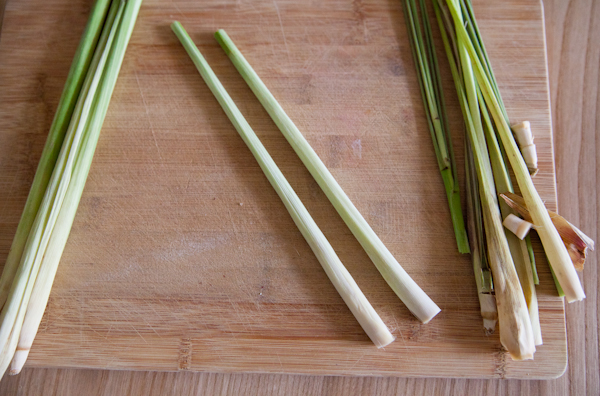
3 stalks lemongrass, cut into 4-inch pieces and bruised
1 tsp curry powder
1 tsp 5-spice powder

2 Tbsp vegetable or canola oil
2 cloves garlic, crushed
beef broth or water
3 medium carrots, cut into thick slices

Accompaniments:
baguette, rice noodles, or egg noodles
Thai basil
lime wedges
salt, pepper, and lime dipping sauce

1. Boil a pot of water with the beef tendon and 1 tsp of baking soda. Simmer for 3 hours or until tendon becomes tender enough for a knife to cut through it with some ease. You may want to simmer this in a slow cooker overnight, so that the tendon is ready to cook in the stew the next day. When tendon is tender, drain and rinse. Cut the tendon in half lengthwise and then into pieces about 2 inches long.

2. Wash and pat dry the beef chuck or shank. Cut into 1.5-inch cubes. Mix in the marinade ingredients. Let marinate for 30 minutes and up to overnight.

3. Heat the oil on medium-high, and then add the crushed cloves of garlic. When the garlic begins to brown, add the marinated beef chuck/shank, along with all the marinade ingredients, and let it brown. You may want to do this in several batches to avoid overcrowding the pot, so that the meat sears rather than steams. Put all the meat, plus the cooked tendon, back into the pot. Then add enough beef broth or water to cover everything by an inch or so.

4. Let the stew simmer on low for about 3 hours. (You can also transfer the stew to a slow cooker at this point and cook on low overnight.) Add carrots to cook during the last half hour.

5. Serve the stew in shallow dishes with baguette, or serve over rice or egg noodles. Include Thai basil, lime wedges for squeezing over, and salt, pepper, and lime dipping sauce for the meat.

salt, pepper, and lime dipping sauce (muoi tieu chanh)

This dipping sauce is so simple, I almost feel silly posting a recipe for it. But I didn’t want to risk it being overlooked for its simplicity, as it is surprisingly tasty, particularly with grilled meats. I especially love it served with bo kho (Vietnamese beef stew) and bo luc lac (“shaking” beef). The fresh tartness of the sauce helps offset the richness of the meat. Vietnam also grows peppercorns (Phu Quoc island is known for its peppercorn farms), and I’d often see people grind the peppercorns themselves in a small mill, which makes for wonderfully fragrant pepper that further enhances this simple dipping sauce.

1 part kosher salt
1 part freshly cracked black pepper (or try it with white pepper as well)
wedge of lime

This dipping sauce is usually served on small condiment plates for each individual, with a wedge of lime sitting next to or over the salt and pepper, so that the diner can squeeze it him/herself.

steamed rice noodle sheets (banh uot)

Some people have childhood memories of their moms making pancakes on weekend mornings. My sister and I have memories of our mom making banh uot or Vietnamese steamed rice noodle sheets.

When I visited Vietnam last year, I got to watch the ladies at the markets making these fresh. It’s a painstaking process that involves pouring rice flour batter in crepe-like fashion over a steamer that resembles a drum. And then you use a chopstick to carefully lift the delicate sheet off.

Now, my mom never made rice noodle sheets from scratch. She bought them premade, rolled up in a bundle from the store. But my sister and I were delegated the task of separating the individual sheets from the bundle and tearing them into smaller pieces. It was perhaps almost as painstaking a process. But it also meant we were all in the kitchen making breakfast together.

A little while back, my husband and I took a short roadtrip to Philly and discovered a huge Vietnamese supermarket there, where I found fresh rice noodle sheets. I couldn’t resist getting some, bringing it back with us, and making our own Sunday morning breakfast of banh uot.

Steamed Rice Noodle Sheets (banh uot)
Serves 2-3

1 12- to 14-oz package of rice noodle sheets
scallion oil
1/4 steamed pork roll (cha lua, also known as Vietnamese ham)
bean sprouts
1/4 cucumber, julienned
Vietnamese herbs, such as mint, Vietnamese coriander, red perilla, etc., cut into a chiffonade
fried shallots
nuoc cham sauce

1. Separate the rice noodle sheets and tear into pieces about the size of your palm.

2. Divide the rice noodle sheets into individual-size servings and set on plates. Drizzle a bit of scallion oil over each plate. Heat each plate in the microwave for about a minute. (My mother always used the microwave, but you could also steam it in a bamboo steamer or a wok.)

2. Cut the steamed pork roll into thin slices. Lay over the rice noodle sheets.

3. Top the rice noodle sheets and sliced pork roll with a handful of beansprouts, julienned cucumber, chiffonaded Vietnamese herbs, and a sprinkling of fried shallots. Serve with nuoc cham dressing.

scallion oil

Scallion oil is one of those things that I hesitate to call a garnish, simply because it adds so much more than just a final flourish to a dish. I have a friend who loves this stuff so much that I always made sure I had some on hand when I knew she was coming over. She, like me, loved simply mixing it with white rice and then adding nuoc cham sauce. I’d usually serve this with grilled pork chop, but I don’t think she (or I) would’ve minded just having the rice.

In Vietnamese cuisine, scallion oil is often drizzled over rice, noodles, rice noodle sheets or rolls, and banh hoi or rice vermicelli sheets. It adds a fragrance and richness to the otherwise bland starch. Usually, nuoc cham dressing is also mixed in as well when the dish is served.

Scallion Oil
Makes about 1/4 cup

3 scallions, chopped
1/4 cup canola or vegetable oil
1-2 cloves garlic, minced (optional)

Put the chopped scallions in a heatproof bowl. Heat the oil in a small skillet or saucepan over medium-high heat. Test to see whether the oil is hot by dropping in a piece of chopped garlic or scallion and seeing if it sizzles. When hot, add the garlic (if using) and allow it to turn golden. After the garlic has turned golden, take the pan off the heat and immediately pour over the chopped scallions. The oil may splatter a little bit, so stand back. The scallions should sizzle and then wilt. Drizzle over rice, noodles, or noodle sheets. Keeps for about a week in the refrigerator. Return to room temperature before serving.